Showing posts with label Galaxy. Show all posts

Monday, July 11, 2011

Samsung Galaxy vs. Apple iPad tab 10.1 2

Introduction:
With summer in full swing and many people take some much-needed vacation, tablets growing gadget choices to bring along their trips away from home. Of course, it is much more portable than more traditional laptops, but more important, they have developed incredibly in order to provide an experience that is tailored to our ever-growing needs. Even though they share many physical characteristics with their plans, so Apple iPad 2 and Samsung Galaxy record 10.1, apparently considered the cream of the crop in the Tablet market now. Surprising values evenly with the baseline cost of $ 500, the last question comes down to which one is better than two.

Design:
Now, we all know the story behind these two razor thin tablets, but it is worth noting that the record for the Samsung Galaxy 10.1 receives the Crown as the thinnest and lightest tablet. With an eye, seems almost two medium thick, but it is only by a capillary to Galaxy record 10.1 edges, iPad 2. Still, we prefer the more refined and polished iPad 2 building in relation to the nature of the Galaxy plasticy tab 10.1. TRUE, there is nothing very polarizing with simple projects, but iPad 2 premium nature undoubtedly makes it the most expensive of the two — especially when sport the same price point. Plastic tab helps is lighter but 10.1.


Again, we are still another similarity between two pills when they sport the best shows that we have seen so far pills grace. On the one hand, Galaxy 10.1 LCD monitors-PLS sizes up to 10.1 ' with a resolution of 1280 x 800 pixels, whereas the iPad 2 comes with a screen 9.7 "IPS and 1024 x 768. Quite frankly, both are very detailed, brightness and vivid color output to wow all externally, but after looking at two thoroughly detailed, iPad 2 has a more natural color display production. There is in fact a small blue glow with screen Galaxy 10.1 with white – while at extreme angles, enables black to thin gray color.

Both the exclusive power and volume buttons accouterments rockers at the two tablets kept in touch, while maintaining a reasonable amount of feedback when pressed, but the buttons in the iPad 2 jut out just a little bit more. In other ports, both proprietary billing data/ypoteleia PIN and 3.5 mm headphone jack. IPad 2 is a speaker in the back corner of the Tablet, while the entry Galaxy 10.1 provides support for the left and right stereo speakers. It is worth noting that the battery is not user Removable and will require you to send it to the service if you want to replace. In addition, give no funds to supplement the skills of internal storage – meaning, you are stuck with what you have.


View the original article here

Saturday, July 9, 2011

Vs HTC sense Samsung Galaxy s II

Getting Started:
"Pick and choose, pick and choose, people!", screamed jester with HTC sense and Samsung Galaxy S II juggling in front with the crowd to buy the hottest smartphone of the season.

If there was ever a tough call between two top-shelf, Android phones, it should be. Even a glimpse through the spec sheet, I can't tell you a both problem is powered by a 1.2 GHz dual core chip sets, allows them to record Full HD 1080p video at 30 fps with 8MP camera, 4.3 "shows and both are running latest Android Melopswmo 2.3 with homebrew interface overlays – concept and TouchWiz.


And yet, when you dig deeper, HTC sense and Samsung Galaxy S II is somewhat different design philosophy-polarizing screen technology, and the draft resolution do not match, the dual-core processors chipsets are not from the same parent and the concepts of user interface has two conflicting things. What is right for you? Read while we jump in to solve this dilemma.


Design:
Despite the fact that delicate and heavier to the Samsung Galaxy s II, HTC sense of really feel more nicely in your hand. Both phones have almost the same width and length, but the Galaxy S II comes a little edgy, rectangular plate is anorexic, although adding thickness and be in heft HTC sensation to feel more stable, and that the curved corners with tapered edges descending dimension be palm-friendly. This feeling, then reinforced by the choice of material for the aluminium chassis-and soft-touch plastic is more comfortable for handling and show off by black plastic.


But these are deliberate design approaches-the first since the Samsung Galaxy S, prefer hit where it should be on marketing materials, and will become Galaxy S II thinnest and lightest handset with a 4.3 display, hence the design of all-plastic. HTC prefers more sophisticated materials design and still currently is seeking to achieve a fairly consistent look throughout your portfolio, the Android, which makes the phones of this signal is directly recognizable, regardless of their niche market is heading for even more commonly because of similar shows.

So which one should you choose depending on the design and just looks completely subjective-personally, I prefer phones with a large screen is as thin and light as possible, but many others will go to the design template and more sophisticated and distinctive character of HTC. If you pay a lot of money for a phone, you might get some as well as aluminium around it, right?

In addition, the various video technology allowed the Samsung Galaxy S to reduce screen delicate II-Super AMOLED plus takes less than Super-LCD with HTC sense. It has other merits, also, like the almost infinite contrast, wide viewing angles and saturated, vivid colors. The screen on the HTC sense is able to demonstrate the lively colors, but with a more limited scope, and when you're half tilting the phone to determine the angles of view, the colors and brightness are starting to fade considerably.


The LCD screen on the HTC sense appears slightly lighter indoors, but outdoors in direct sunlight for low reflectance s Galaxy II coating makes the image a bit easier to see. There is one area where HTC sense is in front, but the resolution 960 x 540 qHD, compared with 480 x 800 pixels in 4.3 in II Galaxy S-incher. By Super AMOLED plus technology removes the PenTile matrix pixel RGBG settlement, individual pixels are different, as the Galaxy S, for example, when you bring your phone near your eyes.


Unlike ATRIX Motorola 4 G, however, a user with screen qHD PenTile RGBW pixel arrang felt sense of HTC a normal RGB matrix to decision qHD. Thus, taking into account the same 4.3 "screen sizes, gives motion round for HTC handsets, which has the highest density of pixels from the Samsung Galaxy S II, a bit easier on the eyes when reading small text. So, if you can read many of your smartphone, and many people are doing today, HTC sense, perhaps, a safe, but if you watch many movies, Super AMOLED Plus is best happiness colors, as well as the ability to define separate hue. The colors appear a bit colder, but, as in the first Super AMOLED screen.


We look at both sides, we find the key is located on the right energy/lock for s Galaxy II more adequately from the top of the HTC sense, as you are struggling to reach such a large handset. Often we pressure on the central aspect of s Galaxy II however, erroneously, locked the lower screen-the flight for a replacement.

The glass at the top of the screen feels like HTC is slightly curved inwards at the ends, recessing screen in shallow pit, which is supposed to be better protected when the phone is placed face-down. Bezel on the Samsung Galaxy s II also sticks over the show, however, which means it never touches on a flat surface that places either. HTC solution also see cooler by adding the total impression of the Curved shape of the phone. Capacitive buttons at the bottom of the screen is a little narrower at HTC sense and a little more difficult to reach and operate with one hand from s Galaxy II.
Two phones sporting newfangled MHL port, microUSB charging combines and HDMI-out opportunities in one location, but you must use a separate cable, as both companies sold the extra equipment that mirrors the phone to screen TELEVISION HDTV. Like the MHL port at the bottom is better for the Samsung Galaxy s II, instead of the left, such as on HTC sense-this is somewhat less mixing work on your phone to stream, but more when the film, so your collection of poison.

If you want to wrap up the Department of design, we would say once again that the phones go around their home large 4.3 "screens in a different way. II Galaxy s is the thinnest and lightest phone with such a view, which in conjunction with the informal black plastic shell, makes it easier to carry around. More sophisticated shape and solid Build, with soft-touch plastic and aluminium components, HTC sense, on the other hand, more ergonomic operation and a pleasure to handle. The choice here is determined entirely from your personal preferences.


View the original article here

Monday, June 27, 2011

Samsung Galaxy S II First Impressions

The Samsung Galaxy S II is coming to Canada soon. We aren’t able to divulge carrier details but during a media briefing we had a chance to play with the device, my first impressions are below and will follow up with a full review shortly.


Samsung has a solid competitor not only to the iPhone, but to the rest of the highly-competitive smartphone market. It seems like they’ve taken their hard-earned lessons to heart, and improved in every way upon the original.


Samsung-Galaxy-S-II


Hardware


The hardware is all plastic, but its lineage owes far more to the Nexus S and Infuse 4G than to the original Galaxy S series. It’s clear Samsung learned a few things from the original: plastic is fine as long as it doesn’t creak; plastic is fine as long as it doesn’t invite fingerprints.


The SGS2 improves upon the first in both respects: the main plastic body extends through the sides and partway to the back, creating a very sturdy “unibody” casing that feels far sturdier than any previous Samsung device I’ve used, while keeping it admirably thin at 8.5mm. That’s 1.4mm thinner than the original.


Before moving onto the front, I must note that the battery cover, which only fits over a portion of the entire back, seems flimsy and breakable. But Samsung has done some wonderful things with plastic, as this thing bends and bends while maintaining its shape. It also has a wonderful ribbed pattern that feels great in the hand and provides more grip than the smooth back of the original Galaxy S.


The screen is hands-down the best in the business. Discount for a second that the 4.3? display still displays the same number of pixels as the 4? original, and some 30% fewer than the 3.5? iPhone 4. Once you see it, you will understand. The blacks are the blackest, the colours the most vivid, the text the sharpest. I don’t know how else to explain it, but when I am reading black text on a white background it feels like I’m reading a piece of paper. There is no screen at all. This is likely because the screen itself is so close to the glass, preventing that disconnected feeling you get from looking at a lower-quality LCD. I wish this didn’t read like hyperbole, but it’s the only way I can describe it. With a slightly higher resolution, the Super AMOLED display of the Galaxy S II would be perfect. As it stands, there are issues with pixel density and aliasing that are not present on the iPhone 4's Retina Display. But the 4.3? size makes it far easier, for me at least, to comfortably read articles, books and web pages.


The design is also commendable. There is a simplicity to the face that is absent from most other Androids. When the screen is off, only the Home button is visible, as the Back and Menu buttons are lit only when needed. There is a noble austerity to the entire device, from its solid lightness to its lack of pretension. It has just two ports: a combination USB/HDMI port on the bottom (known as a MHL port) and a 3.5mm headphone jack on top. The left side finds the small black volume rocker and on the right a power button. There is a single speaker on the bottom rear of the device, where a small chin protrudes.


The phone at 116g is meagre, but weighted perfectly. Holding it to talk is not cumbersome, despite its ample size.


Software


The Galaxy S II ships with TouchWIZ 4, a skin which at first resembles its much-derided predecessor. Luckily, Samsung has made some drastic improvements to performance and aesthetic over the past year, and I can happily say it rivals Sense in responsiveness and usefulness.


Give me a stock Android skin any day of the week, but some of the features Samsung has added to the new TouchWIZ are admirable. But more than anything, this is Android running flawlessly, without slowdowns, crashes or memory problems. That it took a device with a 1.2Ghz dual-core processor and 1GB RAM to finally tame the wild beast that is Android is a bit mystifying, but tame Android it does.


Browsing flies. The stock browser is hardware-accelerated, and over 3G or WiFi performance is unprecedented. There is an iOS-like kinetic scrolling mechanism that all but does away with j***y Android browser scrolling. Pinching your fingers together brings up the tab menu. It’s a simple thing that, combined with the flawless performance, makes me want to use the stock browser. I haven’t done that since 2008.


Elsewhere


The Galaxy S II has Android 2.3.3 Gingerbread loaded, and the dark aesthetic has been adapted nicely to work with TouchWIZ. The camera app has been given a nice visual overhaul, and the 8MP camera takes great shots. Focus is fast, and photos have a nice amount of detail, though colours are somewhat muted giving surroundings a dreary look. Some people prefer the way colours “POP” on the iPhone 4, but I think it’s a misnomer to say its quality is superior. Rather, it seems that Samsung captures colours more accurately, and certainly with more detail. It’s a matter of opinion whether purists will prefer Samsung’s results. The 2MP front camera also take nice photos in good lighting and the phone natively supports video calling, though as far as I can tell only between Samsung devices.


Bundled apps are appreciated, but cannot be removed, which is a shame. There are four hubs: Games, Social, Music and Readers, each powered by a different third-party service. For example, Music is a modified version of 7Digital’s Android app, and Readers is a combination of Zinio, PressDisplay and Kobo. Surely Samsung could have left these out without opposition, but for them it’s a matter of trying to sell content on the device a la iTunes and differentiate from the other Android manufacturers who are without licensing deals.


While the SGS2 doesn’t have a Tegra 2 processor in it, it’s arguably a better gaming machine than the equivalent Optimus 2X or Motorola Atrix. It achieves an awesome 3200+ points on the Quadrant benchmark, compared to around 1500 from the Nexus S and 2500 from the Atrix.


Battery life has proven a marvel. At 1600mAh, it’s some 300milliamps less than the Atrix, and yet it seems to last far longer. In fact, the Galaxy S II has the best battery life of any Android device I’ve tested to date. I clocked nearly 26 hours on a single charge and still had 19% left before I recharged it, and that was with doing what I normally do through the day: browsing, calls, Twitter, email and camera. I’ve heard good things from other users, too, so I know I’m not a lucky aberration.


I’ll leave the rest for the review, but so far, so good. If you’ve had a bad experience with Android before, there is still a lot to like about the Samsung Galaxy S II. Make no mistake though, this is one of the smoothest smartphone experiences I’ve ever had, and that includes extensive use of the iPhone 4. Sure, the experience is different, and some would say not as refined, but there are few if any tasks one cannot accomplish as quickly or easily on the SGS2 as they can on an iOS device. It’s taken this long, but with the latest iteration of Samsung, HTC and Motorola devices, it seems that the hardware has finally caught up with the demands of the Android software.


—-


In no particular order, here are a couple field notes of what Samsung has added to the experience:


- Double-tap the home screen for Vlingo-powered voice commands. This also works at the home screen
- Touch two points of a web page / photo and tilt the phone to zoom in and out
- Move icons around the homescreens by tilting the phone
- Mute incoming calls and sounds by turning over the phone
- Press and hold an empty part of the home screen to bring up a custom editing menu with excellent widget support
- 7Digital-powered Music Hub
- Extensive social media support through the Social Hub
- Readers Hub with News/Books/Magazine support (PressDisplay/Kobo/Zinio)
- Game Hub powered by mobage
- Built-in Video Maker and Photo Editor
- Kies air management to connect phone to PC or Mac
- Built-in IM client, FM Radio, Polaris Office


By Daniel Bader
Mobilesyrup

Tuesday, June 21, 2011

Finished Samsung Galaxy Tab 10.1 already rooted

Less than two weeks after the finished retail edition of Samsung's Galaxy Tab 10.1 arrived on the market, the device has already been rooted. Enthusiasts at XDA-Developers have posted a tutorial and files that are said to be necessary to gain root access. The exploit is allegedly reversible, allowing users to unroot their devices if necessary.


The Tab 10.1 runs the latest official release of Google's tablet-optimized OS, Android 3.1, limiting the range of potential customizations until users have a chance to explore the possibilities. Both the retail variant and pre-release tablet, distributed at Google's I/O event, have been rooted.


Samsung's latest tablet centers around a 10.1-inch display with 1280x800 resolution, with a dual-core Tegra 2 processor and choice between 16GB or 32GB of storage.


Electronista

Wednesday, June 8, 2011

Verizon set to ship LTE-equipped Galaxy Tab 10.1

Verizon has announced that the LTE-equipped Galaxy Tab 10.1 tablet will begin to ship in the coming weeks. The device, which has been tweaked since its initial introduction early this year at Mobile World Congress, represents the largest model in Samsung's Galaxy Tab series, with a 10.1-inch display and NVIDIA's dual-core Tegra 2 processor.


gtab_10_inline


The revision that showed up in March at CTIA features a slimmer profile than the European edition, with a thickness of just 8.6mm. Other features include an eight-megapixel primary camera, two-megapixel front-facing camera, and Android 3.1.


Verizon will begin taking pre-orders for the Galaxy Tab 10.1 on June 8, with a launch expected in the "coming weeks." Customers will be able to choose from the 16GB version for $530, or the 32GB variant for $630.


Electronista

Saturday, June 4, 2011

Samsung 5-inch Galaxy Player gets $270 Best Buy price leak

samsunggalaxyplayer5-priceleaklg


Best Buy's mobile app inadvertently gave away possible pricing for the Galaxy Player 5. Also known as the Galaxy S Wi-Fi 5.0 elsewhere, the five-inch, 8GB Android player is shown costing $270. The price puts it well above a similar iPod touch, although it has a much larger display, a higher-resolution three-megapixel camera, real GPS, FM radio, and a microSDHC card slot.


Neither Best Buy nor Samsung has confirmed the pricing. The device's presence would still line up with official plans for a spring launch. Just the 8GB capacity will be available, but a four-inch Galaxy Player 4 is also on tap that should come closer to the $230 mark of the iPod.


Both are effectively versions of the Galaxy S without the phone and share the same version of Android 2.2 with Samsung's TouchWiz interface on top.


Electronista

Tuesday, May 24, 2011

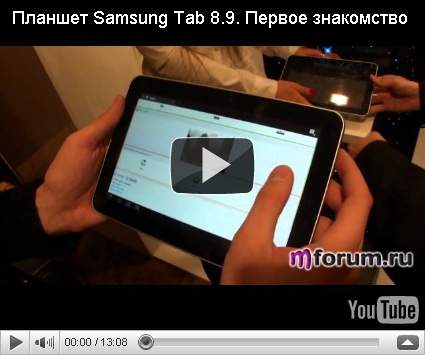
Samsung Galaxy Tab 8.9 shows in Russia with keyboard dock

Samsung's Galaxy Tab 8.9 has been given one last preview ahead of its wider June arrival. A Russian look, including a video (below), has shown the tablet with the full TouchWiz interface we saw at CTIA in March, including the more advanced quick settings pop-up and the live home screen tiles. MForum.ru also saw a new keyboard dock that was optimized just for the 8.9-inch tablet's size.


samsunggalaxytab89-russia


The early glance was potentially worrying as the tablet, despite its dual-core Tegra 2, appeared to be slowing down with basic video playback. At this late stage, it's unlikely to be beta firmware and could have been a one-off glitch or a symptom of deeper problems.


Samsung is due to ship the Galaxy Tab 8.9 in early June at prices of $469 for a 16GB Wi-Fi model and $569 for a 32GB edition.


<\/param><\/embed><\/object><\/div>";" galleryimg="no">


Electronista

Monday, May 23, 2011

Samsung Galaxy S II coming to US by AT&T, Verizon, Sprint

samsunggalaxysii-mwc Plans to bring the Samsung Galaxy S II to the US have been independently supported by an accessory maker's posting of a silicone case. Lining up with USPTO trademarks, the mention from Wireless Xcessories Group has the dual-core Android 2.3 device coming to AT&T as the Attain, the Function at Verizon, and the Within at Sprint. T-Mobile is unusually exempt and may either go without or have a delayed version.


The appearance of one case for three carriers suggests the US version will, unlike the original Galaxy S, carry largely the same design from carrier to carrier. Samsung may either have gained more influence or else decided it was necessary to speed up the launch.


No mention has been made of when these phones would release, but Samsung is holding an event on May 24 that could mark the US debut. A Verizon roadmap has put a "Galaxy 2" on the launch schedule for May and could see the phone available very quickly.


Electronista

Thursday, May 19, 2011

Samsung confirms Android 2.3 updates for Galaxy S, Tab

Samsung after a false start last month has officially started rolling out Android 2.3 updates for virtually all of its Galaxy devices. Every Galaxy S phone, the Galaxy Tab, and its budget Galaxy mix should all get the extra performance and user interface updates, including copy-and-paste text. The update is being pitched as especially helpful for 3D games and media playback, likely due to the much improved OpenGL graphics.


Initial upgrades will focus on the Galaxy S in Nordic countries and the UK starting sometime this week. Samsung plans a gradual rollout to the rest of the world, including North America, but didn't say when or how universally beyond mentioning a "regional plan." Upgrades for the Galaxy Tab as well as the Ace, Fit, Gio, and Mini also weren't mentioned. Some users still report updates already heading out on the Galaxy Tab, however, and may leave only a short wait.


All updates on the older phones still need to go through Samsung's Kies app for PCs.


samsunggalaxys-white


Electronista

Tuesday, May 17, 2011

Samsung Galaxy S II hits 3 million pre-orders

Samsung claimed unprecedented genuine demand for the Galaxy S II on Sunday night. The electronics giant said it had picked up three million pre-orders worldwide for its dual-core Android phone by the end of April, when it went on sale in Korea. Orders were expected to only go up as the phone reached global scale and peaked at 120 countries.


samsunggalaxysii-preorder


The number suggested pent-up demand beyond just Samsung's home country, where it sold 120,000 of the phones in the first few days. It may force the company to up its forecast for the phone since it had predicted 10 million Galaxy S IIs shipping for the entire year.


Demand is likely to taper off, but at this rate could see Samsung's rapid growth in smartphones continue and threaten companies like Apple. The Galaxy S II has earned much of its early buzz from being the fastest phone to date as well as its 4.3-inch Super AMOLED Plus display.


Its performance could change with the launch of the HTC Sensation by the summer as well as the next iPhone in September.


Electronista

Monday, May 16, 2011

Samsung Galaxy commit revision

Introduction:
Although Verizon released the first 4 G LTE smartphone last month, which is HTC Thunderbolt, some of them may have missed that the first ever 4 G LTE Android smartphone in the United States began in fact from MetroPCS approximately one month before this-Samsung Galaxy commit. If you want to be fair, Metro was also the first for an LTE phone in the United States, as promised, however, lacked a smart OS-crafts Samsung so this time with the Galaxy commit the carrier's customers can really take advantage of these high speeds. However, in a world where the speed of the outermost, Galaxy commit really contains 4 G speeds and shows that it is worth the price of $ 299 or case-short other 4 G phones on the market? Let us see.

Included in retail box is Samsung Galaxy smartphone indulge SCH-1500mAh battery, R910, 4 GB microSD memory card with the movie iron man 2 installed wall charger, microUSB cable with detachable and user manuals.


Design:
Samsung Galaxy committed is all-black, shiny plastic, feels very slick to the touch, but remains a magnet for fingerprints and dust. Galaxy commit is about the same thickness as that of a Board of Directors, 0,60, "but it is almost a half-empty Ones.


You can compare Samsung Galaxy engaged with many other phones using our visualization tool size.

Extra height, which translates into a larger 3.5 "display, up from 3.3", but the quality has dropped from 480 x 800 AMOLED on the vessel only 320 x 480 resolution TFT on Galaxy commit. So what does this mean? Quite simply, that the appearance of the Galaxy to indulge is 0.20 "larger pixel resolution, but is less, which means that text and images seem more erratic and the colors appear more washed out look once and not AMOLED is TFT. We had, of course, have preferred that the Galaxy delivered using the same high quality that is on the Board of Directors.

Physical buttons at the bottom of the screen also changes, as there are now four template, used to access the home menu, back, and search. It is a nice size, but some reason is not repulsed, which makes it impossible to see in the dark. Around the sides of the phone is volume rocker, lock, key energy/3.5 mm headphone jack, microUSB port and camera shutter button. You must remove the battery cover access to the microSD card slot.


The sliding QWERTY keyboard on the milky way is set-out is much the same way as in the case of vessels. The keys are nice, but there is very little space between them and is completely flat, which makes typing a little challenging to feel alone. But delivers some good feedback and noticeable "click" sound when pressed. Keyboard Galaxy commit is by no means the best, we have seen, nor are at their worst, but it is easier to use than the small range of the keyboard. Samsung Galaxy delivered 360 degrees:


View the original article here

Sunday, May 15, 2011

Samsung Galaxy Tab 10.1 to come in white

samsunggalaxytab101-white


Samsung gave those coming to the Google I/O conference a treat with word from early adopters of a white version of the Galaxy Tab 10.1. The design is the same 8.6mm slim version shown in March. An XDA owner and others have said the Android 3.0 slate is coming with the hinted 21Mbps HSPA+ 3G and 16GB of storage, though presumably 32GB and possibly Wi-Fi versions are due as well.


The white 10.1 will still have the NVIDIA Tegra 2 processor as well as Samsung's tablet-optimized TouchWiz 4.0 layer on top. Both the eight-megapixel rear camera and two-megapixel front camera cameras are still intact and should give 1080p video recording.


Samsung hasn't said when it expected the white version to ship, though it's likely to show in the same early June timeframe as the black version.


Electronista

Wednesday, May 11, 2011

Slimmed Galaxy Tab 10.1 Wi-Fi reaches FCC

samsunggalaxytab101-ctia


Samsung has delivered a new version of ts Galaxy 10.1 tablet to the FCC for certification. Identified as the GT-P7510, the device has also received interoperability certification from the WiFi Alliance. Samsung is still just rolling out its original 10.1 tablet.


The new Galaxy 10.1 is 2.3 mm tablet thinner than its predecessor (8.6mm vs 10.9mm). By comparison, the iPad 2 is 8.8mm thick. Samsung has announced that the Wi-Fi-only version of the Galaxy Tab 10.1 will arrive in US stores on June 8, priced at $500 for the 16GB version and $600 for the 32GB model. A 16GB iPad 2 with Wi-Fi nearly matches that price at $499, and the 32GB iPad 2 costs $599.


Electronista

Tuesday, May 10, 2011

Samsung Galaxy S II hits 3 million pre-orders

Samsung claimed unprecedented genuine demand for the Galaxy S II on Sunday night. The electronics giant said it had picked up three million pre-orders worldwide for its dual-core Android phone by the end of April, when it went on sale in Korea. Orders were expected to only go up as the phone reached global scale and peaked at 120 countries.


samsunggalaxysii-preorder


The number suggested pent-up demand beyond just Samsung's home country, where it sold 120,000 of the phones in the first few days. It may force the company to up its forecast for the phone since it had predicted 10 million Galaxy S IIs shipping for the entire year.


Demand is likely to taper off, but at this rate could see Samsung's rapid growth in smartphones continue and threaten companies like Apple. The Galaxy S II has earned much of its early buzz from being the fastest phone to date as well as its 4.3-inch Super AMOLED Plus display.


Its performance could change with the launch of the HTC Sensation by the summer as well as the next iPhone in September.


Electronista

Wednesday, May 4, 2011

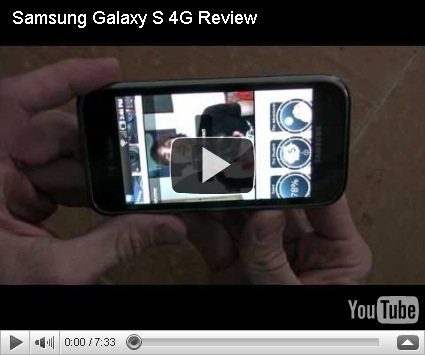
Samsung Galaxy S 4G Review

Samsung Galaxy S 4G Report


samsung-galaxy-s-4g The Samsung Galaxy S 4G picks up where the Vibrant left off, adding 4G HSPA+ speeds of up to 21Mbps, a front-facing VGA camera, enhanced battery life, and Android 2.2 with Flash 10.1 support. The rest of the phone is strikingly similar to its 3G predecessor, even down to the disappointing lack of a camera flash. T-Mobile also dangles the carrot in front of its customers by preloading the movie Inception onto the phone in order to show off the Galaxy S 4G's Super AMOLED screen. This is a classic T-Mobile incentive, and one that should make Christopher Nolan happy. James Cameron got his jollies with Avatar preloaded on the Vibrant. According to numbers, the Samsung Galaxy S 4G is T-Mobile's fastest phone to date when it comes to network speeds, as long as you live within range of the company's advanced towers. For the rest, the Samsung Galaxy S 4G is just another Galaxy S phone. Let's take an in-depth look at the Samsung Galaxy S 4G.


Design


The Samsung Galaxy S 4G did not fall very far from the Vibrant's mold when it came to architecture. In fact, the façades of both phones are nearly identical, sporting 4-inch 800 x 480-pixel Super AMOLED screens and standard Menu, Home, Back, and Search haptic feedback touch controls. However, the Galaxy S 4G adds a front-facing VGA camera for video chat via QIK. Just like the Vibrant, the Samsung Galaxy S 4G is thin and easily pocketable. When it came to screen resolution, our experience was identical to the Vibrant's—Inception looked fantastic on the super bright screen, and we had no trouble viewing in direct sunlight.


The only noticeable difference is the Samsung Galaxy S 4G's back panel, which features an iridescent gunmetal paint job that shifts when rotated in the light. We liked the swanky looks of the Galaxy S 4G over the Vibrant's odd bubble pattern design—the Galaxy S 4G just stands out. Unfortunately, the Samsung failed to incorporate an LED flash in the back of the Galaxy S 4G, and that costs them some major points, as you'll find out in the Camera section.


External controls remain simplified, with a roster that consists of an undersized Volume control, 3.5mm audio jack, Power/Lock button, and USB terminal with sleek sliding cover. Underneath the phone's back panel lurks the preloaded 16GB MicroSD card in a slot that houses up to 32GB, SIM card, and larger 1650 mAh battery compared to the Vibrant's 1500 mAh juice box. The Samsung Galaxy S 4G displays some noteworthy design improvements, but it's not enough to significantly distance the phone from the Vibrant.


<\/param><\/embed><\/object><\/div>";" galleryimg="no">

Software and Interface


The Samsung Galaxy S 4G emulated the Vibrant when it came to our overall interface experience. The phone is governed by a 1GHz Hummingbird processor and features a TouchWiz interface in conjunction with Android 2.2 OS. Although the Vibrant didn't ship with Android 2.2, it received an upgrade to keep up with the times. So, in terms of hardware speed, both phones were very similar, minimizing the learning curve to a flat line. The smartphone offers Stereo Bluetooth, GPS, WiFi, and calling over WiFi for a guaranteed signal. Flash 10.1 support is also part of the package, and the Samsung Galaxy S 4G allowed us to watch our embedded YouTube review videos right from within the browser with a lag-free performance.


It's not that the interface on the Samsung Galaxy S 4G is underwhelming—it's still a great system. However, not much has changed since the Vibrant, which places Samsung in a definitive safe zone. Either that, or it means the clock was ticking and Samsung had to crank out a 4G phone in order to stay on top of the competition (TouchWIZ 4 will for instance be powering the Galaxy S2). We still found solace in the little eccentricities on the Galaxy S 4G's interface that attracted us to the Vibrant in the first place. For instance, in order to call a contact, all we have to do is swipe to the right across their name and left to text message them. We could also assign individual sounds for emails, texts, and other notifications, which were levels of customization not offered by many other devices.


For the social networker, the phone offers Buddies Now, which compiles a list of your favorite Facebook, MySpace, and Twitter pals and tosses them into a virtual Rolodex with synched status updates. There's also the all-encompassing Feeds and Updates widget that acts as a contact-wide bulletin board, and the Samsung Galaxy S 4G supports numerous photo sharing accounts like Flickr, Photobucket, Kodak, and Snapfish. Video chat users can jump on QIK, which is also preloaded, and the phone has Microsoft Exchange ActiveSync for email. Of course, the Android Market, Gmail, Maps, and other Google services are part of the package, and let's not forget about Inception being preloaded as well.


Although the Samsung Galaxy S 4G appears to be a well-equipped speed demon, we did experience some minor lagging, quite similarly to the Samsung Vibrant. For instance, while using TeleNav GPS, the application simply froze and disabled the rest of the phone until we powered off and back on. There is a handy Program Monitor that allowed us to monitor RAM memory and kill active applications, and that came in handy for smoother OS operation and battery conservation. The phone also has doubleTwist, which synchs iTunes music, playlists, videos, and pictures via AirSync. We're impressed with the versatility of the Galaxy S 4G, but it's not that far removed from the Vibrant.


Call Quality/Battery Life


Like the Samsung Vibrant, we had nothing to complain about with the Samsung Galaxy S 4G when it came to call quality. Despite the hubbub of traffic and town noises, we were able to have unmolested calls, thanks to the phone's polished microphone system. Although Samsung upgraded the Galaxy S 4G's battery to a 1650 mAh pack, we only discovered a minute boost in phone stamina. Naturally, we tested games, took pictures and video, browsed the Internet, and made calls, but by the end of the day, the phone was hurting for some electrical juice. Our advice is to keep an eye on the phone's Program Monitor and make sure the brightness of the phone is not set to maximum.


Camera


We actually had a better experience with the 5-megapixel camera on the Samsung Galaxy S 4G than we did with the Samsung Vibrant. We're not sure if Samsung changed the glass or tweaked the sensor a bit but all of our bright light testing ranked among the better phones we've seen in this class. At times, the phone had a tendency to oversharpen, but for the most part, colors were natural and detail was uninhibited.


Unfortunately, Samsung chose to omit a flash for the second time on the Galaxy S 4G, so we had to shoot in Night mode any time the lighting was not favorable. Night mode worked surprisingly well, however, but we found that it was difficult to capture blur-free images because of the shutter speed sacrifice. The bottom line is that the Samsung Galaxy S 4G needed a flash, and it didn't get one.


The same applied to video mode. 720p bright light performance was good, although it didn't live up to the same standard as the phone's still image quality, thanks to its unpredictable frame rates and occasional lack of detail. Still, we were able to attain some decent footage up until the lights dimmed. Without a Night mode or Flash to shoot with, video mode at night was essentially useless.


On the plus side, the Galaxy S 4G has a stellar camera interface, just like the Samsung Vibrant. We have numerous Scene modes, Shot Modes, manual controls, and a new Default Destination option, which lets us choose where we wanted the images to ultimately end up. The Front Facing Camera also came in handy for self-portraits, and for most users, the camera will be fine in bright light. But we're still bitter about that lack of flash!


Infosync

Samsung takes 200K Galaxy S II pre-orders, passes iPhone 4

samsunggalaxysii-launch


Samsung claimed an at least initial win for the Galaxy S II. The company took over 200,000 pre-orders across all three major Korean carriers between Monday of last week and the launch on Friday. About 160,000 of those were at the country's largest carrier, SK Telecom.


The pre-orders cracked 10,000 units in the first 29 minutes and doubled that in just over an hour, at 64 minutes.


Samsung's results blew past iPhone 4 pre-orders last August and set a relatively high but potentially surmountable barrier for Apple. The American firm took just over half as many pre-orders last year, but it also had just KT as its only carrier and only added SK Telecom as a carrier in March. Apple has yet to launch any iPhone on more than one Korean carrier at the same time.


Samsung's long-term, worldwide ambitions for the Galaxy S II are relatively modest. It plans to sell 10 million of the phones in all of 2011, or the same as it sold of the original last year. A wider range of Android phones should still lead to larger results, but its caution suggests it doesn't necessarily expect to beat other Android makers. Apple already shipped 18.65 million iPhones just in the winter.


Electronista